Saturday, January 20, 2018

Exploring war through woodblock prints

Exploring war through woodblock prints

BY JOHN L. TRAN  CONTRIBUTING WRITER  JAN 20, 2018  ARTICLE HISTORY
Sensō-e, literally “war pictures,” are a particularly dramatic form of Japanese woodblock print that emerged as a style of reportage during the Satsuma Rebellion of 1877, and went on to become a widespread and popular way of disseminating patriotic imagery during the First Sino and Russo-Japanese wars. The 2017 catalog “Flash of Light, Fog of War” features 75 of these images and was produced following a donation of a private collection to the Ackland Art Museum at the University of North Carolina at Chapel Hill.

Flash of Light, Fog of War: Japanese military Prints 1894-1905, by Bradley M. Bailey, Gene Roberts, Katie Ziglar. 160 pages ACKLAND ART MUSEUM, Art.

A woodblock print titled 'The Great Naval Battle of Haiyang Island' by artist Bairin and carver Hori Yata (1894)

Ackland_2014.40.52, 2/16/17, 2:31 PM,  8C, 2880x5079 (850+512), 58%, Feb'13,  1/25 s, R51.2, G23.2, B32.3Artist: Nakamura Shuko; publisher: Sekiguchi Masajiro: 'The Japanese Destroyer's Great Victory off Haiyang Island' (1894)p18-books-sensoe-b-20180121-870x457Artist: Kobayashi Kiyochika; publisher: Inoue Kichijiro: 'The Naval Battle of Pungdo in Korea' (1894)Ackland_2015.11.12, 2/14/17, 11:57 AM,  8C, 2838x4976 (905+555), 58%, Feb'13,  1/25 s, R51.2, G23.2, B32.3

Sensō-e — reproducible images made to depict current events — were not intended to be appreciated as “fine” art by a cultured elite. They were, however, meant to be eye-catching and sensational and, whatever their aesthetic aspirations, it was incumbent on them to deliver.

During Japan’s industrialization in the Meiji Era (1868-1912) the woodblock prints business was on the decline, and sensō-e were, to some extent, an effort to make bank in a trade that was to be made redundant by the spread of photography.

Several factors contributed to the distinctive style of sensō-e. The depiction of modern firearms and military uniforms, armored battleships and anatomical realism in the medium of the woodblock print make for a singular kind of image, of course, but Ackland Art Museum’s curator of Asian art, Bradley M. Bailey, focuses on two particular visual features of sensō-e: the way light and obscurity are depicted.

To depict artillery, searchlights and ships extravagantly bursting into flames required experimentation with new kinds of visual techniques. Woodblock artists were not embedded war correspondents and their frame of reference was not first-hand experience at the front lines, but photographs, news reports and literature, such as the popular memoir “Human Bullets,” written in 1904 by Tadayoshi Sakurai (1879-1965). This resulted in stylized, almost avant-garde, lighting effects of globules of red flame, hard-edged cones of white against black backgrounds and, perhaps inevitably, explosions that resemble the rays of the Rising Sun flag of the Japanese armed forces.

Another innovation was a response to the fact that, in contrast to the more honourable practice of fighting in the daytime, when you could identify yourself and your opponent, modern warfare often took place at night. Bailey points out that while night scenes are not uncommon in earlier examples of ukiyo-e, the illumination and coloration of subjects would not necessarily be different from that of a daytime image. Sensō-e show strong directional lighting — from camp fires, artificial light, explosions, etc. — and the resulting shadows are used to suggest tension, threat and violence.

Bailey also notes that sensō-e are distinctive in their treatment of smoke, fog, haze and snow. Previously in woodblock prints, the color white would be represented by the base paper being revealed through an absence of ink. However, printers in the late-19th century started to use the white, opaque powder gofun, derived from calcified oyster and clam shells, to create more nuanced representations of the snowy conditions that afflicted soldiers of all sides.

Sensō-e vary considerably in quality, the work of Kiyochika Kobayashi (1847-1915), generally being considered to be among the best of the genre. With their bellicose nature and anachronistic mix of modern subject matter and Japanese woodblock print visual language, sensō-e is a curious sub-genre that has been given something of a wide-berth by art collectors.

The origin of the museum’s collection is itself an interesting story. The collection is a recent donation by Gene and Susan Roberts. Pulitzer Prize-winning journalist Gene Roberts — who started collecting them after covering the Vietnam War for The New York Times — was “intrigued by the notion that a war could be reported through woodblock prints.”

After realizing that the prints were unreliable as journalistic testimony, Roberts’ appreciation of them as visual imagery grew. The jingoism of sensō-e, in which Chinese people are depicted as subservient and backward, while Japanese troops stand proud, is certainly unsettling, but at the level of dynamic composition, kitsch and melodrama, they do have an undeniable appeal.

Academic interest in sensō-e is building, and Bailey graciously acknowledges that, in 2016, Rhiannon Paget, a contributor to The Japan Times, and curator Philip K. Hu organized “the most authoritative and comprehensive historical resource on this material” at the St. Louis Art Museum. That publication, “Conflicts of Interest: Art and War in Modern Japan” enjoys higher production values, and is more substantial in terms of textual entries and breadth of content. However, focusing on the presentation of the images themselves, Bailey’s catalog provides an immersive experience of these quirky visualizations of Japan’s glory days.

Article found in: The Japan Times

Friday, January 12, 2018

What’s in a name?

imageRaised in Scotland, travelled and lived in SE Asia for a considerable number of years, I’ve encountered many many pronunciations / inflections / intonations etc. when pronouncing a word for Tea / Cha .. Throughout Mainland China you hear a potpourri of pronunciations for “Cha” 茶 .. from a soft “sha” to a crisp “Ta”. Mostly encountered when being asked to “Drink Tea”  He Cha 喝茶. The pronunciation of; Drink he 喝 also has regional variations. Most common sound like the English “her” (The possessive form of she) as in; Her book.

Monday, January 01, 2018

A Matching Pair … 2018 has a great start.

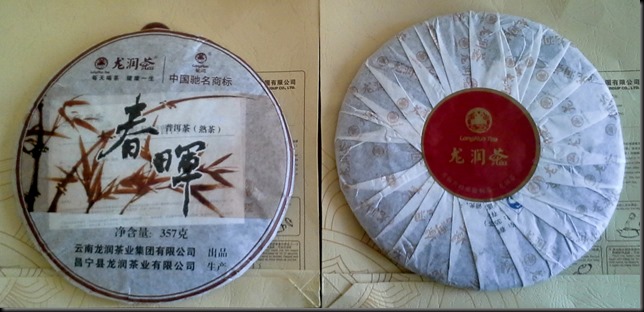
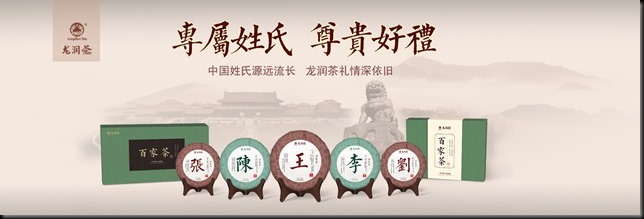
A tried and true Shu-Pu from Long Run Tea Ceremony (company)20180101_081559image

Friday, December 29, 2017

Who does Polaroid's ??? What is a Polaroid ???

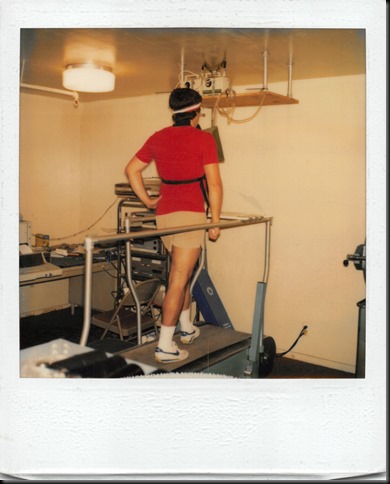
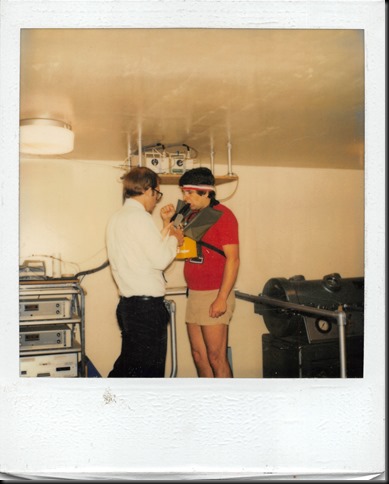
Days work at US Divers: … Captions by “Others” (Mike LaP.)

Working on a Non-SCUBA project .. Emergency Oxygen Supply for the US Bureau of Mines. Lead engineer: Mike B. plus test manikin.

2017_12_27_18_25_1500012017_12_27_18_25_1500052017_12_27_18_23_5500042017_12_27_18_25_1500022017_12_27_18_25_1500062017_12_27_18_25_1500072017_12_27_18_25_1500032017_12_27_18_25_150004

Tree-Be-Gone .. Now I’m stumped !!!

2017_12_27_19_11_320001

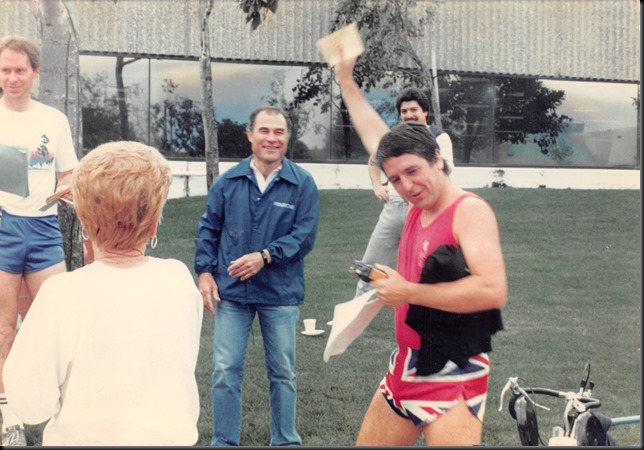
Three musketeers … Team Triathlon

Michael.. swims, John.. bikes & Dan.. runs … Lake Mission Viejo2017_12_27_18_41_3600012017_12_27_18_40_0100122017_12_27_18_41_3600022017_12_27_18_41_3600042017_12_27_18_41_360003

Just a quick Nun around the block

2017_12_27_18_40_010018Yes-placed FIRST in the woman's division2017_12_27_18_40_010015Mary R. takes a gallant 2nd place Smile2017_12_27_18_40_010007


Thursday, December 28, 2017

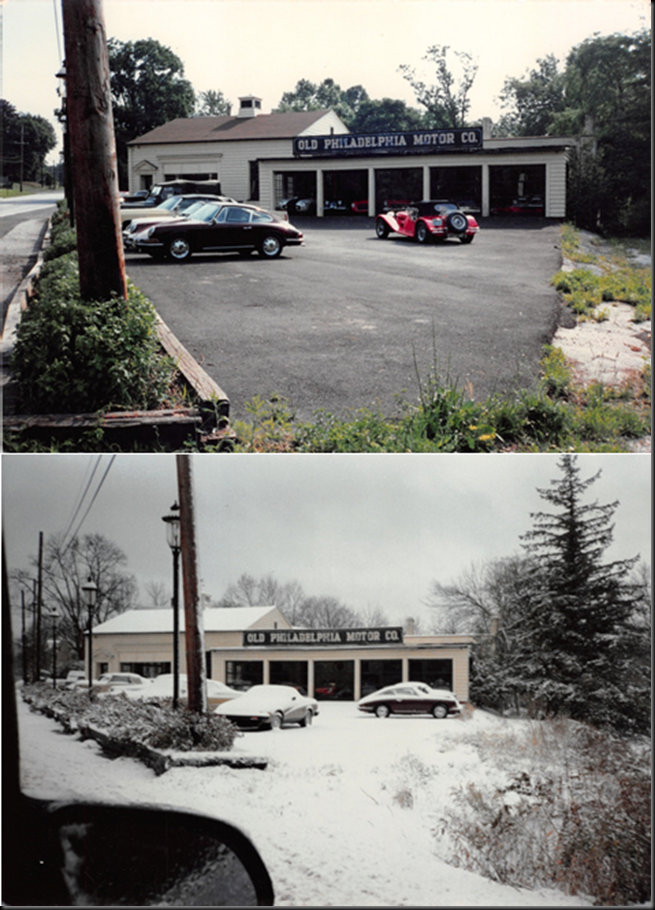
Summer and Winter

Business trips spread over the year offer multi-seasonal views.image

Tuesday, December 19, 2017

UPDATE: Creating alternate tea storage ideas.

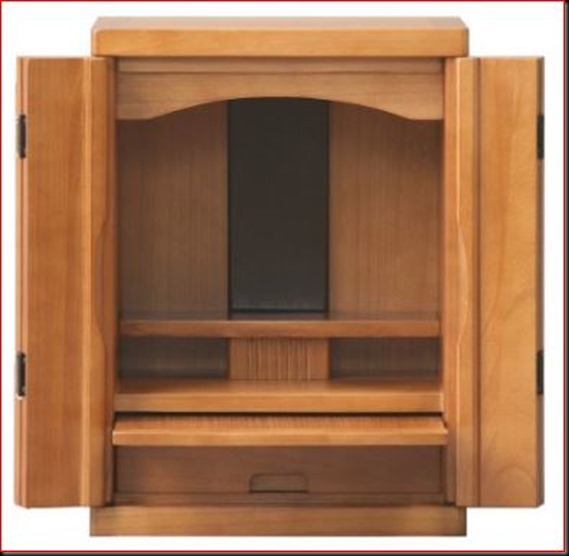
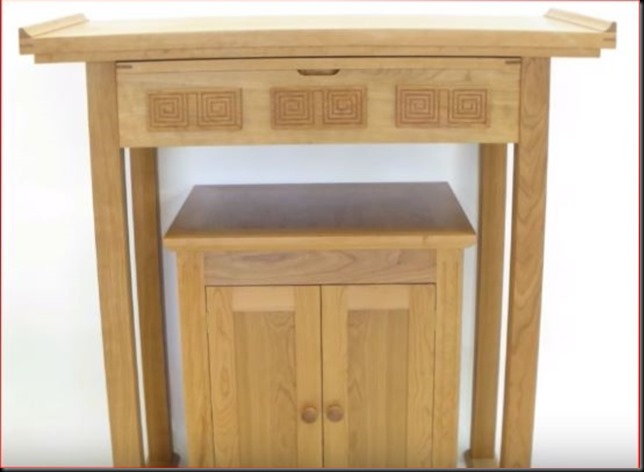
The more I think and plan making a Buddhist Alter inspired Tea Caddy,  I was favoring the style and wood coloring  pictured below, the more impracticable it becomes. I just don’t have the free space to house it and I abhor over furnishing.  So I’ll put in to the back burner on a very low heat. 

ba3

Monday, December 18, 2017

Imperial Measurements

What measurement system you use .. is best left to you.imp1imp2

Creating alternate tea storage ideas.

Lead up / backstory ……………

It’s probable ever since we had Tea we have had a need for Tea Caddies. Growing up in Scotland and literally having a score of Aunties, tea caddies were ubiquities and varied. Indian black tea was the primary tea being stored and served.

In addition we had a fair umber of Hong Kong Chinese families settled in an around Ayrshire. Going to Primary and Secondary school with the kids of Chinese family's I had early exposure to Guangdong / Hong Kong – Cantonese style of tea culture. Needless to say Scottish tea culture (stretching the use of “Culture”)  is vastly different to those of China … pause for nostalgic laugh

Having a sizable collection of Chinese teas allows me the opportunity to amass a number of tea caddies.  I have a thought of using the design and proportions of a Buddhist Alter, proportioned for use in the home, as a starting point for a new caddie.

Yes we are inching toward the metric system SmileCouple of examples below.  Updates to come as the endeavor progresses.buddhist-altarbuddhist-altar-051 Watch is VERY interesting YT video from an extremely down to earth & talented Kiwi woodworker: A Buddhist Altar, https://www.youtube.com/watch?v=otvEJVPgKyA

ba2ba1

Thursday, December 07, 2017

Three out of a bunch.

These three tools are all, now, very sharp, ready to use. The center tool is by Hirsch, my go-to favorite.

Hirsch Carving Tools

Europe's finest woodcarving tools. Manufactured in Germany continuously since 1780. Hand-forged of Germany's finest high carbon tool steel and tempered to a Rockwell hardness of 61.tcttsA bunch more (15) await their turn.ctinab

Wednesday, December 06, 2017

The Cutting Edge

Setting up to sharpen a number of dual bevel edge carving tools. Used for fine detail carving wood blocks. This is a little different than “standard” single bevel edge sharpening. I’ll be expanding on this over the next few posts.20171207_092009cup120171206_175851

The Hangi-to tool, the most useful and important tool in woodblock printmaking. (also called the kiridashi.  It is capable of cutting intricate, flowing lines that are at the heart of Japanese printmaking. All the outlines in the print are carved with this tool.

Single Bevel, Right-Handed Japanese carving tool.FourFW2imageOLYMPUS DIGITAL CAMERAThe back face of the tool has a Flat Face that may or may not be Hollow Ground (as above example)


Monday, December 04, 2017

Save the environment … Use Bio-Degradable fuel

As we see, alternate fuel used for personal transport in not a new idea.16

Wednesday, November 29, 2017

Saturday, November 25, 2017

Just a little fishy …

Not what I had in mind.

127_ShosonTwoGoldfish

Now this is more like it.fs

Wednesday, November 22, 2017

A new (Six year old) Shu Pu-Erh on the menu

Yunnan Longrun Pu-erh Tea Cake-Chunhui (Year 2011, Shu Pu),357gnewpuerhAfter a couple of weeks and many infusions, I give this tea a strong recommendation. Nice strong rich tea with a interesting hint of licorice flavor, aroma is non assaulting but reassuring.

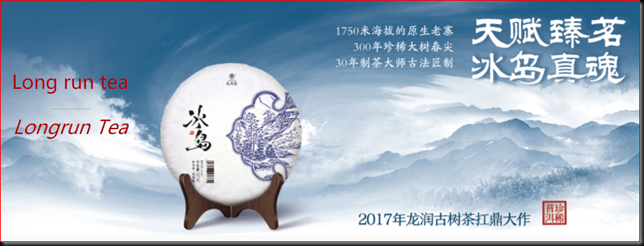
Web-Site: http://longruntea.com/15076287734855701507628826792817